Published on 26/April/2026 · Nature
How Much of the Blue Planet's Green Accent Still Remains
By SORAH Editorial
If the Earth is the Blue Planet, its accent colour must undoubtedly be Green Forest. Forests cover almost one-third of all land globally — yet between 1990 and 2020, over 177 million hectares were lost worldwide. The damage was most severe in Africa and South America, yet countries like Vietnam and Turkey have shown that ambitious reforestation is possible.
If the Earth is commonly known as "The Blue Planet," its accent colour must undoubtedly be "Green Forest." Defined by the UN Food and Agriculture Organization (FAO) as spaces "spanning more than 0.5 hectare with trees higher than 5 meters and a canopy cover of more than 10 percent," forests cover almost one-third of all land globally. These diverse ecosystems vary depending on the climatic regions they inhabit: Evergreen tropical and subtropical jungles thrive in the steady heat around equatorial zones, while conifer stands of pine and spruce sprawl across cooler environments; and throughout more temperate areas, mixed woodlands grow and slumber through discrete seasons.
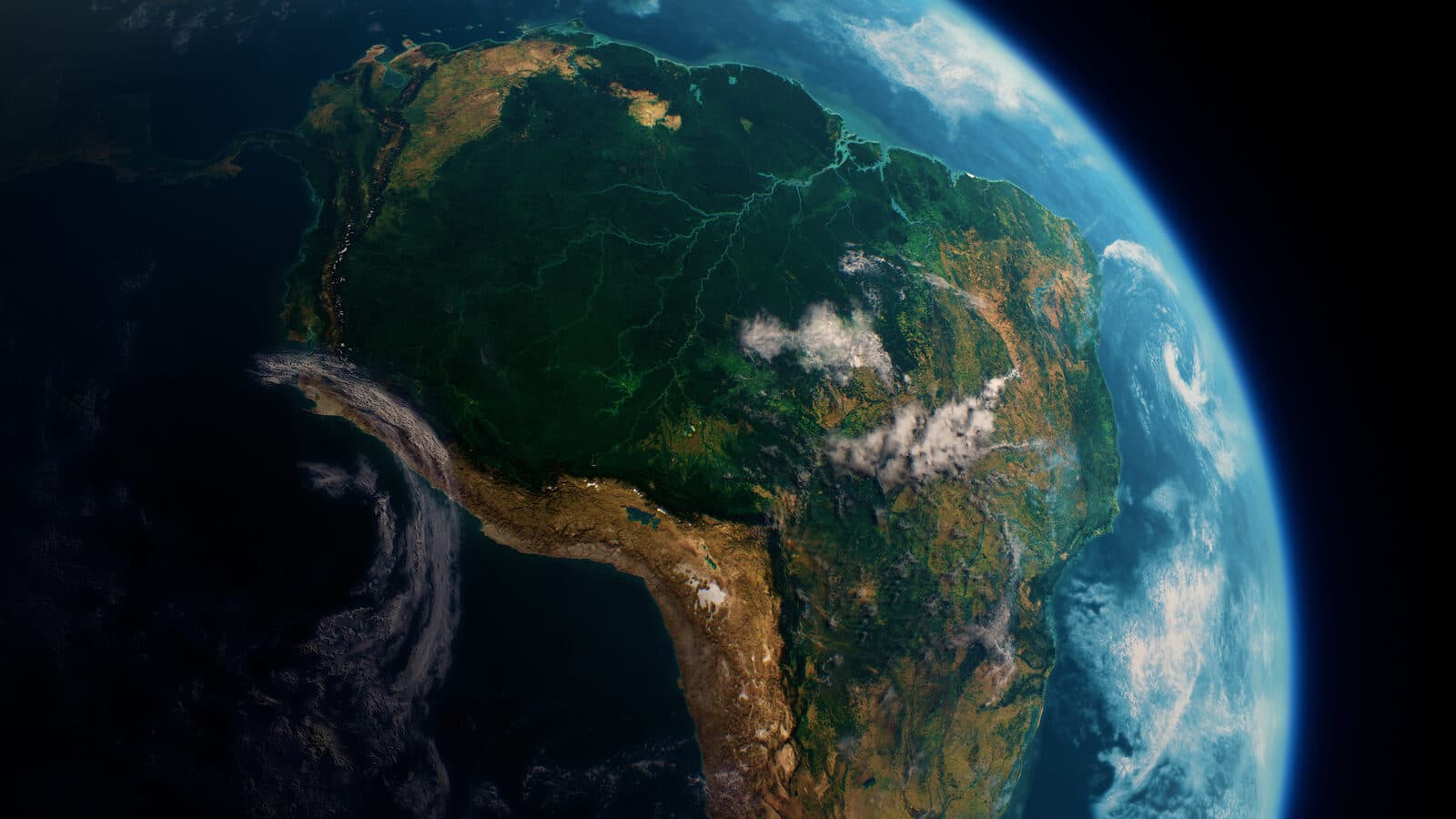
Forests systems as planetary features can range from recent to ancient. Paleoecological records suggest that the Amazon rainforest has been a persistent feature of South America dating to the Eocene epoch 55 million years back, while the boreal forests occupying vast tracts of the north are relatively newcomers in geologic time, having taken root only after the last Ice Age 12,000 years ago. Still younger are many of the plantation forests seeded by human hands — they currently make up approximately 3 percent of total forested area.
Forest Trends Between 1990–2020
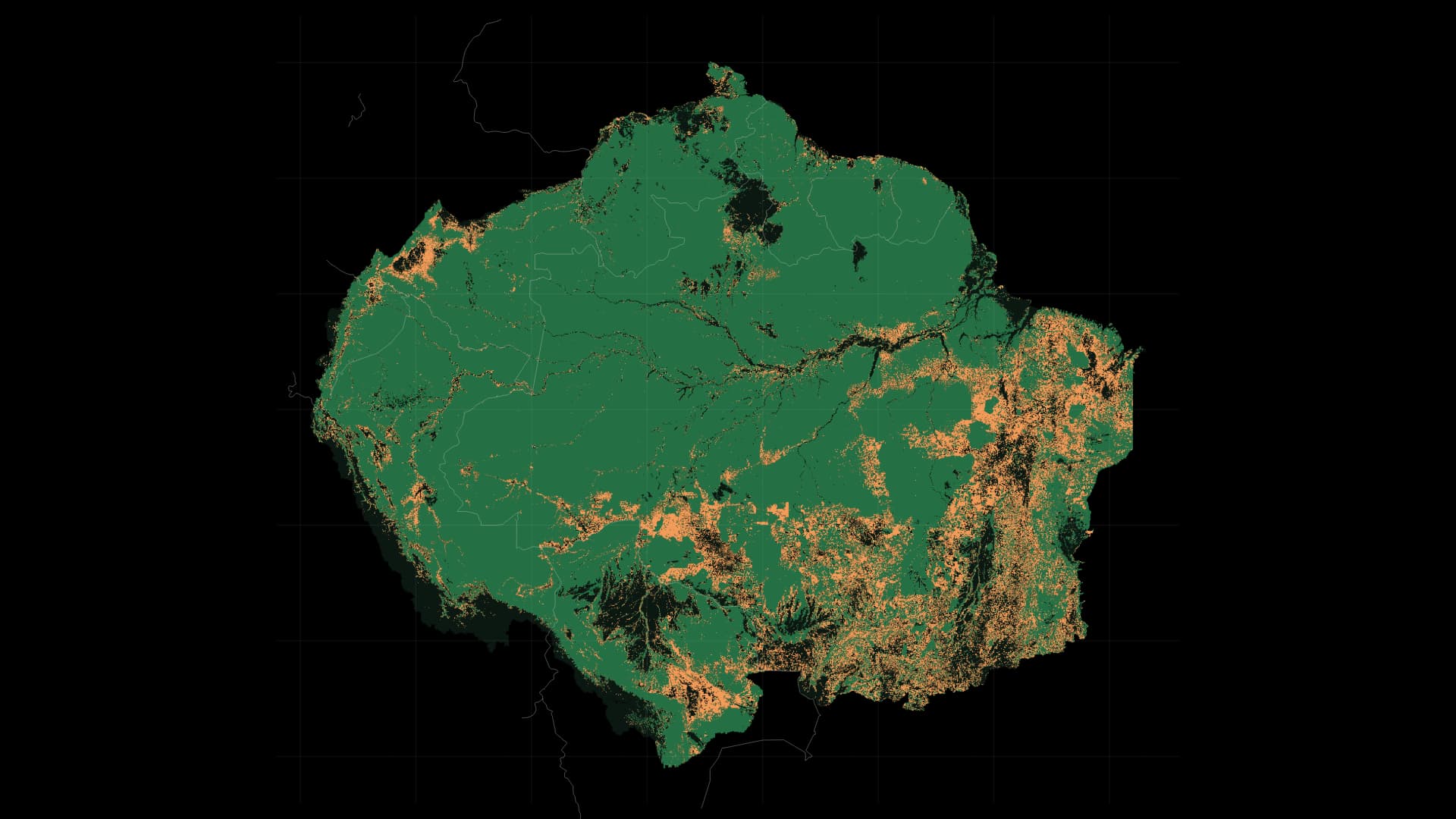
The present-day forests we know are neither equally nor evenly distributed across the planet. Over half of them reside within just five countries: Russia (20%), Brazil (12%), Canada (9%), United States (8%), and China (5%). Throughout human history, resource demands, population pressures, and regional conflicts have come to shape their range. Between 1990 to 2020, overall global cover has decreased by 4%, or more than 177 million hectares, with losses most severe in Africa and South America. Large-scale deforestation has cost Brazil 92 million hectares of its iconic rainforests, while internal strife within the Democratic Republic of Congo has stripped it of 16% of its jungles. In Asia, Indonesia and Myanmar has lost a combined 59 million hectares of forests — a region bigger than the island of Madagascar; and while coverage has remained relatively stable across North America, Europe, and Oceania, this is primarily due to an increase in planted forests, offsetting for the loss of naturally regenerating ones.Not all forests are equal, especially in the ecosystem services they provide. A new plantation is not the same as an old growth forest in its ability to act as a carbon sink when it comes to the fight against climate change. While young trees absorb more CO₂ during their initial stages of growth, a diverse, mature forest has the capacity to store and lock away up to forty times more carbon than a planted monoculture that is grown to be harvested. Compared to tree-planting, which requires intensive labour and regular monitoring, helping degraded forests recover naturally can be an effective, low-cost, and sustainable climate solution. While most nations suffered declines in their natural forests, Turkey, Spain, and France saw a combined increase in coverage of 8.4 million hectares from 1990 to 2020 — an area equivalent to Austria. Then there is Vietnam, the global leader in their commitment to regenerate natural forests, exhibiting gains of 19% in cover over the same three decades — nearly the size of the island nation of Fiji.
The Many Roles of Forests
Forests offer a litany of benefits beyond their role as carbon capture systems. 30% of the world's forests are working ones, producing wood, food, and other essential goods; 10% of them are dedicated to the protection of biodiversity, providing vital habitat for a multitude of species. Additionally, forests are critical for preventing soil erosion, maintaining both air and water quality, and providing social services through opportunities in recreation and tourism.Besides human utility, recent research has shown that they play even more pivotal roles on a planetary level. As trees draw water from their roots and respire through their leaves, they emit large amounts of bio-aerosols — volatile chemicals along with microscopic spores and pollen that become the seeds for cloud and rain formation. Large, intact forests form positive feedback loops with the skies above them; the more the forest grows, the more rain it seeds, which in turn fuels more forest growth and more precipitation. Scientists estimate that the Amazon rainforest draws up to 20 billion tons of water a day into the air, forming an atmospheric river that rivals its terrestrial counterpart in volume. This enormous sky-borne current not only supplies life-giving moisture locally, but to regions as far away as Canada. Researchers have come to coin these major forests as "biogeochemical reactors," self-regulating, planetary-stabilizing systems capable of generating their own weather patterns, nourishing not only themselves and the inhabitants that dwell within, but also to far-flung, distant lands. Thus large-scale deforestation not only threatens the biodiversity and carbon storing capacity of these vital ecosystems, but can lead to an impairment of their underappreciated rainmaking abilities, leading to an increased global risk of drought and fire.
The Future of Forests
Forests continue to face threats new and old in the 21st century. 98 million hectares were affected by wildfires in 2015, mostly in the tropics, while in the same year insect damage, disease, and natural disasters damaged an additional 40 million hectares, mostly in the temperate and boreal regions. Since then, climate change has come to exacerbate the severity of both issues, as the increasing frequency of extreme weather events and temperature trends place increasing stress on these essential ecosystems.Yet there is cause for optimism. The speed at which forests are being lost has slowed significantly in recent years, with the rate more than halved in 2010–2020 compared to the last decade of the 20th century. More than 700 million hectares lie in protected areas as of 2020, while 96% of all forests in Europe are under management plans. Over the past three decades, China has become the leading driver in global afforestation efforts, gaining more than a 40% increased in forest cover — a total of more than 62 million hectares — primarily through the implementation of its "Great Green Wall" initiative, an ambitious, state-backed, tree-planting project along the country's northern border to guard against the effects of pollution and desertification.
Conclusion
While maintaining and increasing forest cover alone is not sufficient to meet our global climate goals, large-scale restoration efforts will play a central part in keeping global temperatures below dangerous levels. Ultimately, planetary well-being hinges on healthy, revitalized forests, as the breath they breathe is that of the Earth's, the same one we and so much of life depend upon. It would serve us well to ensure their ability to thrive and prosper into the foreseeable future.Sources
- FAO — Forest Area 1990–2020
- Maslin, Mark. Amazonia: An Anthropogenic and Natural History, Oxford Academic.
- Wikipedia — Taiga
- FAO — Forest Resources Assessment 2020 (interactive)
- FAO — Global Forest Resources Assessment 2020
- ScienceDaily — Restoring natural forests can outperform plantations
- Jabr, Ferris. Becoming Earth: How Our Planet Came to Life.
- Word Forest Organisation — China's Great Green Wall
Author
SORAH Editorial
April 26, 2026