Published on 26/April/2026 · Climate
When the Colour White Leaves the Top of the Earth
By SORAH Editorial
With only a small temperature change, sea ice might exist — or it might not. In 2015, chief scientist Mats Granskog drifted through the polar night aboard the research vessel Lance, collecting data on Arctic ice that now behaves very differently than it once did. Satellite records show that Arctic sea ice extent is now approximately 50% below its 1980s values.
"Ice is fascinating. With only a small temperature change, it might exist — or it might not," explains Mats Granskog. As the chief scientist on board of the research vessel Lance of the Norwegian Young Sea Ice project, he should know. In 2015, Granskog and his team froze their vessel into the ice pack north of Svalbard, Norway. For months they drifted through the long polar night to collect data, looking at ice from above and below. They found that the arctic ice behaved very different to how it had used to.
Arctic Sea Ice Extent
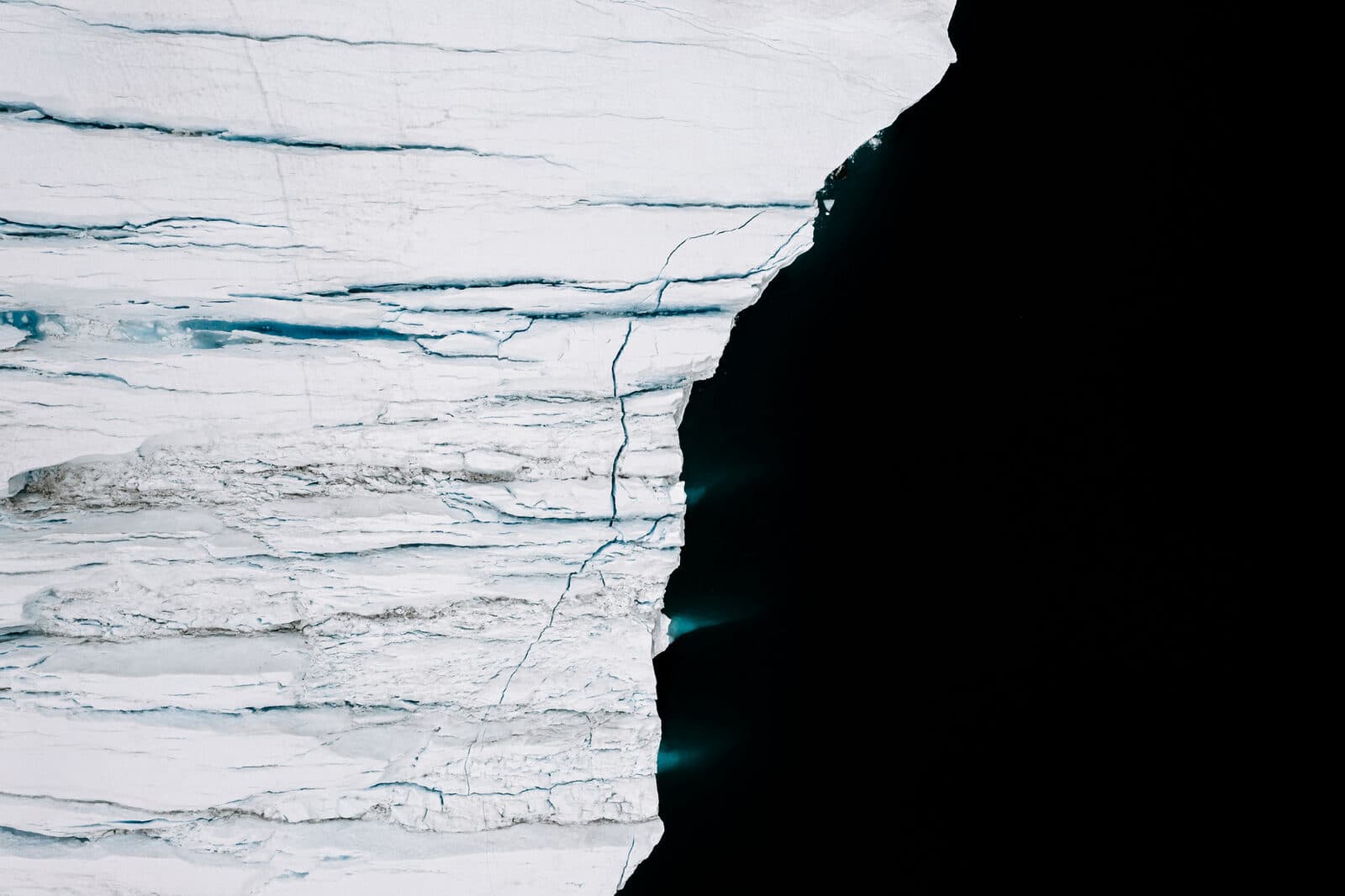
The Arctic Ocean is vast. Its 14.5 million square kilometres cover the Geographic North Pole. In its midst lies a deep sea basin, surrounded by the broad shelves of the Barents, Kara, Laptev, East Siberian, Chukchi, Beaufort, White and Lincoln Seas. To the south, the Arctic Ocean meets the landmass of continents, bordering with Canada, Greenland, Iceland, Norway, Sweden, Finland, Russia, and the United States.Arctic sea ice is not a solid and static phenomenon, but fluctuates with the seasons. During winters when one night lasts several months, temperatures drop to an average of −37 °C. It is from November to February that conditions are perfect for new sea ice to grow from the waves. The arctic ice shield is not made of freshwater like icebergs, glaciers, or ice shelfs, but rather from salty ocean water freezing. The high salinity demands that the temperature of the water cools down to −1.9 °C before ice is formed, when water molecules lose their kinetic energy and lock into lattice structures. In ideal conditions, these needle and pancake-shaped ice crystals increase until a fine slurry floats on top of the ocean waves. If the wind stays calm, the slush turns into thin ice floes. By ways of ridging, clashing, colliding and rafting, single floes move with one another, creating a fractured landscape made up of channels and cavities. By February, the sea ice extent is at its annual maximum, and most of the Arctic Ocean will be covered in a frozen shield, hostile to most life above, with howling winds licking the white, harsh surface.
During spring and summer months, the temperature can reach an average of 10°C, with spikes of up to 30°C. Most of the winter ice melts in these conditions, but some remain all year-round. During this time many animals awaken from their winter hibernation, migrating birds return, and parts of the Arctic become passable by ships. By September, the sea ice extent minimum is reached.
The monitoring of sea ice extent started in 1978 with satellite-borne passive microwave sensors from Nimbus 7, launched by NASA. Its SMMR instruments marked areas that are covered by more than 15% with frozen water. Over the years, these satellite recordings have given us insights into long-term trends, variability, and seasonal changes. Data shows that sea ice extents are now ~50% lower than values were in the 1980s. The last seventeen measured September sea ice extents (2007–23) were the seventeen lowest on record.
Today, by mid-July, sea ice has retreated and melted almost completely for most of the Alaskan and Siberian coast, as well as Hudson Bay in Canada. One month later, the Beaufort, Chukchi and East Siberian Seas are almost ice-free, while the Atlantic region has remained the closest to the old average. Until recently, sea ice would grow over several years, but increasingly the average sea ice is only one to four years old.
Arctic Sea Ice and Climate
"Ice is very cold and immeasurably slippery; it glistens as clear as glass and most like to gems; it is a floor wrought by the frost, fair to look upon." — Poem from the Exeter Book, 10th century
Sea ice acts as an interface between the ocean and the atmosphere. The ocean's dark surface has a low albedo and thus increases absorption of sun rays, leading to rising temperatures. In contrast, the high albedo of white surface ice reduces the absorption of solar energy and keeps the ocean cooler. The interplay of white ice and dark ocean has helped to equalize earth's climate. However, with the downward trend of sea ice extent, more dark water surfaces are exposed, more solar energy is absorbed, and a runaway cycle of warming and melting has begun.
The role of the arctic sea ice for our global climate is even more complex. When sea ice is formed, it separates the salt from the water; while the water freezes, the salt is pushed down below the ice's surface, increasing the salinity of the water beneath. This dense salt-enriched water sinks and eventually contributes to the global ocean conveyor belt, circulating along the seafloor towards the equator, delivering rich nutrients through the exchange of warm and cold currents. Sea ice thus drives a vast and vital system, and is a key factor in influencing the earth's climate.
The Future of a Changing Arctic Landscape
A new sea is in the making, and with it, significant, unpredictable change. Decreased sea ice cover opens up new trade and transportation routes. Currently the Northeastern Passage along the coast of Russia shortens the shipping distances between Europe and Asia by up to three times, enabling companies to reduce fuel use. In the near future the Northwest Passage along the North-Canadian Coast will also allow for shorter transit times and make shipping companies less prone to delays and tariffs along the southern routes. Ultimately an ice-free Arctic will bring about new geopolitical challenges, increase resource extraction activities and thus increase pressure on the arctic regions.The ecological impact of receding arctic ice can already be seen in the environmental changes through the emergence of new bacteria and harmful algae blooms, along with the decline of traditional fishing industries for herring and squid. People who live in the Arctic are having to learn to adapt to these changes; their indigenous way of life is dependant on the resources on land and sea and is greatly affected by the decline of sea ice. Hunting seasons for seals have become shorter, and the mammals carry less fat. Fish are sick from algae blooms and caribou herds are declining. Adaptation for the indigenous communities means collecting data and sharing their concerns with local governments, who then might impose bans on the harvesting of animals to help sustain the future wildlife.
Some coastal communities, like the indigenous Tanana Dene, have subsisted in Alaska for more than 12,000 years. Because their livelihood depends on reading the arctic landscape, the Tanana Dene are constantly observing and recording the subtle and drastic changes in their environment. As a result, the recently founded Alaska Arctic Observatory and Knowledge Hub (AAOKH) are emphasizing the tribe's role as local stewards. Learning to factor these Indigenous perspectives and observations into the decision-making process might lead to more inclusive, equitable, and community-led responses.
Conclusion
Sea ice: With only a small temperature change, it might exist — or it might not. Yet, that small change in temperature can lead to an ice-free Arctic Ocean which will have planetary implications. From global ocean health to rising challenges in national security, the fate of arctic sea ice will profoundly impact the interconnected networks of life on Earth.Sources
- Nature — Greenland's bone-dry winter
- NASA Earth — Current State of Sea Ice Cover
- NOAA Arctic Report Card 2023 — Sea Ice
- NOAA Arctic Report Card 2023 — Executive Summary
- NSIDC — Sea Ice Age
- Norwegian Polar Institute — Albedo
- NOAA — Sea ice and climate
- NOAA Arctic Report Card 2023 — Ocean Primary Productivity
- WWF Arctic — Retreating sea ice and Indigenous life
- Alaska Arctic Observatory and Knowledge Hub
- NOAA Arctic Report Card 2023 — Working with Communities
Author
SORAH Editorial
April 26, 2026